
Expert Guidance to Help You Write, Refine, and Transform Your Personal Statement Into the Essay That Earns Your Interview
Your GPA is set. Your MCAT score is in.
Now comes the part most premeds underestimate — and the part that can change everything.
Your personal statement is the third deciding factor in a medical school admissions decision. Not a formality. Not a box to check. The one document in your entire application where the numbers stop mattering and your story takes over.
You can only slice and dice a GPA and MCAT score so many ways. But what you can write — what you can convey about who you are, why you chose this path, and what you will bring to the profession — that is limitless.
This is your opportunity to be personable. To share what cannot be found anywhere else in your application. To make the case, in your own voice, for why you belong in medicine.
A strong personal statement opens doors that your numbers alone cannot open.
It earns interview invites from schools that might otherwise have passed.
It makes a reader who has seen ten thousand essays stop and think: "I need to meet this person."
That is the one job your personal statement has — and this service is built to make sure it does it.
This is not minor editing. This is not a quick proofread. This is a transformative process designed to take what you have and shape it into the most compelling case you can make for yourself — the essay that earns the interview and puts you on the path to the white coat.
You can write your way to medical school.
Transform Your Personal Statement3-round and unlimited packages available · 24–72 hr turnaround
The Essay That Gets You the Interview
Here is what admissions committees report — not what applicants assume, but what AdComs themselves say: most personal statements are not personal enough.
Applicants stick to safe, predictable topics. They write about their experiences without revealing who they are. They give their reader a record of activity instead of a window into the person behind it.
You can only evaluate a GPA and MCAT score so many ways. At a certain point in the review process, every applicant looks comparable on paper. Your personal statement is where that changes — or it does not.
The ones who get interviews write essays that do something different. They share what cannot be found elsewhere in the application. They are specific where others are vague. They are personable where others are formal. They make the case — clearly and compellingly — for why they belong in medicine and what they uniquely bring to it.
Most premeds treat the personal statement as an afterthought — something to handle once the MCAT is behind them. They spend thousands of hours building a record, then give the one document that makes the human case for that record the least amount of their attention.
This is not theory. This is what happens every admissions cycle.
AdComs are not just evaluating your scores. They are evaluating whether you can make a compelling case for yourself.
Your essay is that case.
The 3 Topics That Will Sink Your Application
Every cycle, admissions committees see the same three essays. They recognize them within the first paragraph — and the damage is immediate. The moment your reader thinks "I've seen this before" — you have lost them.
The Medical Condition
A family member or you experienced an illness. It was formative. It led you to medicine. Thousands of applicants write this exact essay every cycle.
You need to bring far more than a diagnosis to the page.
The Immigrant / Education-First Family
Your family sacrificed everything. Education was non-negotiable. Medicine is the fulfillment of that sacrifice.
It is meaningful. It is personal. And it is one of the most overused narratives in medical school admissions.
The Science Class Revelation
A dissection, a video, a moment in biology where you just knew. This single experience ignited a lifelong passion for medicine.
AdComs are evaluating whether you are ready for the profession — not reliving the moment you discovered you liked science.
If your draft is built around any of these topics, it needs to be rebuilt — not polished.
This is exactly where well-intentioned help makes things worse. A friend, a classmate, a professor — they respond to the writing. They miss the strategy entirely.
That framework is what this service provides.
What Your Essay Must Do
Every personal statement must answer two questions. Miss either one and your application stalls — regardless of your GPA, your MCAT, or your extracurriculars.
Why Medicine?
Not "I want to help people" — AdComs view that answer unfavorably and hear it thousands of times every cycle.
You need to demonstrate a deliberate, informed decision about this career — one that accounts for what the profession actually demands. Your clinical exposure is where that case gets made.
Why You?
There are more qualified applicants than available seats. The committee needs to understand what you specifically bring to the profession.
This is not a list of accomplishments. It is evidence — woven through your narrative — that medicine is in your heart and that you have the self-awareness to articulate why.
The strongest applicants never answer these questions directly.
They weave the answers throughout the essay so that by the time the reader finishes, both questions are resolved — without ever having been explicitly asked.
The admissions reader should not be able to point to one paragraph and say "here is where they answered Why Medicine." The answer should be felt across the entire essay.
That is the difference between a good essay and one that earns you an interview. And it is precisely the kind of strategic construction that requires an experienced eye — not just a good writer.
This Is Not Editing —
This Is a Transformation
Most students do not have a writing problem. They have a clarity problem. They know what they want to say — they do not know how to say it in a way that is structured, compelling, and memorable to a reader who has seen ten thousand essays just like it.
What this service provides is not minor edits. It is not light-touch feedback. It is a comprehensive, strategic overhaul of how your story is told — because the difference between the essay you have and the essay that gets you an interview is rarely about grammar.
It is about structure, theme, narrative direction, and knowing exactly what an admissions reader needs to feel by the time they reach your final paragraph.
- Minor tweaks and proofreading
- Grammar and punctuation fixes
- Surface-level feedback
- Commenting on what you wrote
- Leaving the structure intact
- Strategic narrative overhaul
- Theme and structure first
- Admissions-lens assessment
- Rebuilding what does not work
- Elevating your authentic voice
My work starts with structure — not sentences.
Theme
Is there a clear, cohesive argument running through this essay — or is it a collection of experiences looking for a point?
Topic Selection
Are you writing about the right things — or falling into the traps that admissions committees recognize and discount immediately?
The Opening
Does your first sentence create forward momentum — or does it give a tired reader permission to disengage?
The Two Questions
Does your reader finish knowing why medicine and why you — without either having been explicitly asked?
Red Flags
If there are weaknesses in your application, are they addressed directly — without excuses — in a way that builds rather than undermines your case?
By the time we are finished, your essay will not look like what you submitted.
It will be sharper, more specific, more compelling — and unmistakably yours.
That transformation is what gets the interview. The interview is what gets you in.
Your voice stays. Everything that was holding it back goes.
Be Careful Who You Take Advice From
When it comes to your personal statement, everyone has an opinion. Friends. Classmates. Professors. Pre-health advisors. Online forums.
Their intentions are good. The problem is intentions do not equal expertise.
Writing a strong personal statement for medical school requires more than being a good writer, a good student, or someone who once applied. It requires knowing the subtle cues admissions committees are actually looking for — the structural signals, the narrative choices, the specific ways applicants distinguish themselves from a field of equally qualified competitors.
The Professor or Strong Writer
They can improve your prose, tighten your sentences, and catch grammatical errors. What they cannot do is tell you whether your theme, topic, and narrative direction will land with an admissions committee.
Responds to the writing. Misses the strategy.The Pre-Health Advisor
They are managing hundreds of students simultaneously. The attention your essay requires — the strategic, line-by-line, round-by-round work — is not something they have the bandwidth to provide. You will get encouragement. You will not get transformation.
Surface-level read. Not strategic assessment.The Classmate Who Got In
They know what worked for them. That is one data point from one applicant in one admissions cycle. Their experience does not translate into expertise about what works universally — and they are still your competition for the same seats.
One data point. Still your competition.Online Forums and Essay Swaps
Feedback from anonymous strangers whose qualifications you cannot verify, whose incentives you cannot assess, and who are in direct competition with you for the same medical school seats. The blind leading the blind — with your career on the line.
Unverified. Unreliable. Potentially harmful.The feedback that matters comes from someone who understands medical school admissions at a granular level — not just someone who has been through it, but someone who has spent nearly two decades studying what separates the essays that open doors from the ones that do not.
Unclear, conflicting, or well-meaning-but-wrong feedback does not just fail to help your essay.
It can actively hurt it.
Multiple editors pulling in different directions dilute your voice, muddy your theme, and produce an essay that sounds like a committee wrote it — which is the opposite of what admissions committees want to read.
This is too important to leave to chance. Work with someone who knows exactly what admissions committees are looking for — and how to get your essay there.
What Students Say
Real premeds. Real essays. Real acceptances.
"Dr. Spears has a unique ability of transforming my personal statement to express all the thoughts I've been struggling to convey to AdComs."
"You have helped me tremendously with my personal statement and on my journey as a premed student. I knew there were parts of my PS that really needed to be stronger, but I just didn't know what to work on or how to go about it. I really appreciate you taking the time to read my PS and give comments."
"I can't thank you enough for your help — both for guiding me in the right direction with the paper and completely revising it. I received an acceptance letter yesterday. It is difficult to write about oneself, especially one's failures, and I'm grateful for your quick and great work."
"I have been accepted to medical school at Case Western Reserve. The school's statistics are off the charts, so I know that the personal statement you helped me with made a difference. I could not have gotten to this point without your advice and edits."
Why Work With Me
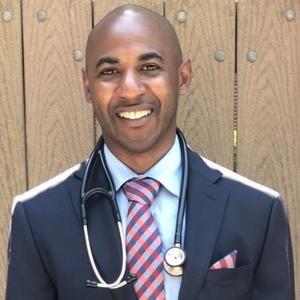
What Makes This Different
How We Work Together
Every engagement starts the same way — with your draft and a clear-eyed assessment of where it stands. No fluff. No false encouragement. Just an honest read and a strategic plan for getting your essay where it needs to be.
You Submit a Complete or Near-Complete Draft
Before strategic work can begin, I need to see how you think and where your narrative currently stands. Do not wait until you think it is good enough — most first drafts are far from the finished product, and that is expected.
Send your draft to me via email once your purchase is confirmed.
Structure and Strategy First
Before a single sentence gets polished, I assess the essay at the structural level — theme, topic selection, narrative direction, and the two questions. Most first drafts undergo significant reorganization at this stage.
There is no value in refining sentences that are going to be cut. The structure has to work before the language can shine.
You Revise — Then We Refine
You take my feedback and revise. Then we go deeper — into clarity, specificity, language, and impact. Opening momentum. Paragraph transitions. The closing paragraph, which should land with confidence — not sentiment.
Each round brings the essay closer to the version that makes an admissions reader stop.
The Essay That Gets You the Interview
By the time we finish, your essay will be unrecognizable from what you submitted — sharper, more specific, more compelling, and unmistakably yours.
That is the standard. Not a good essay. The essay that earns the interview.
Format
Google Docs with tracked changes, inline comments, and an email summary after each round.
Turnaround
24–72 hours per round on my end. You will not be waiting on me.
How to Submit
Email your draft to Jason [at] doctorpremed [dot] com after purchase is confirmed.
Draft Requirements
Complete or near-complete draft. AMCAS guidelines: 5,300 characters as best as possible.
I do not write your essay.
I guide, challenge, and elevate your thinking so the final product is authentically yours — at its best.
AdComs are skilled at detecting essays that do not sound like the person sitting across from them in the interview.
Your voice stays. Everything that was holding it back goes.
Choose Your Package
Both packages include the same strategic, admissions-focused process. The difference is how many rounds of revision we complete together.
Frequently Asked Questions
No. You write — I guide, challenge, and refine.
The essay must sound like you because you will be interviewed based on it. AdComs are skilled at detecting essays that do not sound like the person sitting across from them. This service is designed to make your voice stronger, clearer, and more compelling — not to replace it.
Expected. Most first drafts are far from where they need to be — and that is exactly what this process is for.
Submit what you have. A complete or near-complete draft is all I need to begin. Do not wait until you think it is good enough. Getting it in front of a strategic eye early is always better than polishing something that needs to be rebuilt.
My turnaround is 24–72 hours per round on my end. You will not be waiting on me.
The overall timeline depends on how quickly you revise between rounds. Students who engage consistently and revise promptly move through the process efficiently. Give yourself enough runway — do not start this the week before your application deadline.
Yes. You can upgrade at any point by paying the difference between the two packages.
If you start with 3 rounds and find you want to continue working, simply reach out and we will pick up right where we left off under the unlimited package.
You can seek input — but keep active editing centralized.
Multiple editors pulling in different directions is one of the most common ways a strong essay gets weaker. Conflicting feedback dilutes your voice, muddles your theme, and produces an essay that reads like a committee wrote it. That is the opposite of what admissions committees want to read.
All sales are final once work has begun.
Given the nature of this service — where my time, expertise, and attention are committed from the first review — fees are non-refundable. Students who commit to the process get results.
Once your purchase is confirmed, email your draft directly to Jason [at] doctorpremed [dot] com.
Please share it as a Google Doc so we can work collaboratively with tracked changes and inline comments. Make sure sharing permissions are set so I can edit the document.
Still have a question?
Reach out directly and I will get back to you promptly.
Your Personal Statement Has One Job.
Make Sure It Does It.
Everything else in your application has already been submitted. Your scores are what they are. Your activities are what they are.
But your essay — the one document AdComs read in your own words, in your own voice, making your own case — that is still in play.
You can only be evaluated on your numbers so many ways. What you write — who you are, what drives you, why you belong in medicine — that has no ceiling.
A compelling personal statement opens doors that are otherwise closed.
It earns you a seat at a table your numbers alone would not have gotten you to.
It makes a reader who has seen ten thousand essays set yours down and think: "This one is different. I need to meet this person."
That is the one job your personal statement has — and that is what this service is built to do.
You can write your way to medical school.
No waiting. 24–72 hr turnaround per round.